
Ahobila Narasimha Swamy
The Origin of the Name "Ahobala"
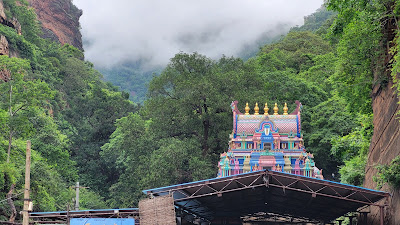
As the most significant deity of the Ahobila Kshetram, the Lord resides here in a natural cave. When Lord Narasimha manifested in this ferocious (Ugra) avatar and slayed the demon king Hiranyakashipu, the celestial Devas were awestruck by His divine power. In awe, they chanted:
The name "Ahobala" reflects this exclamation of the Devas, celebrating the boundless strength and valor of the Lord.
Iconography & Form
The deity within the cave is a sight of supreme spiritual energy:
- The Lord is seated on a raised platform in the powerful Veerasana posture.
- The form is Mahogra Swaroopam, featuring two hands engaged in the destruction of evil.
- Bhakta Prahlada is seen seated in front, receiving the eternal protection of his Master.
- Adjacent to the cave, Goddess Mahalakshmi is worshipped in the form of Chenchu Lakshmi.
Celestial Worshippers
Upper Ahobilam has been a destination for divine beings across eras. It is believed that Lord Shiva pacified the anger of Narasimha Swamy here by chanting the Mantra Raja Pada Stotram.
The Secret of the Sixth Jeeyar
Adding to the mysticism of this shrine, records mention that the Sixth Jeeyar of the Ahobila Math once entered a mysterious cave within this sanctum and never returned, choosing to remain in eternal service to the Lord.
Need a Forest Jeep or a Local Guide for Upper Ahobilam?
WhatsApp Venkata Prathap