
Ahobilam, deeply nestled within the rugged, dense Eastern Ghats (specifically the Nallamala forest range) in Andhra Pradesh, is universally revered as one of the most powerful and ancient centers of Vaishnavism. It is not just a temple; it is a sprawling, sacred geographical entity. According to the Brahmanda Purana, this is the very holy ground where Lord Narayana assumed the fierce, yet compassionate avatar of Lord Narasimha (half-man, half-lion) to protect his greatest devotee, the young boy Prahlada, and to slay the tyrannical demon king, Hiranyakashipu.
The name 'Ahobilam' itself holds a fascinating origin story. It is derived from the Sanskrit exclamation of the Devas (celestial beings) who witnessed the terrifying manifestation of Lord Narasimha. Seeing the Lord tear out of a stone pillar and defeat Hiranyakashipu, the Devas chanted in sheer awe:
"Aho Balam! Aho Balam!" (Oh! What immense power! What supreme strength!).
Furthermore, because the Lord manifested inside a magnificent cave within these hills, it was also praised as "Aho Bilam" (Oh! What a wonderful cave!). Over millennia, these two exclamations merged to form the sacred name of this Kshetram—Ahobilam.
Unlike most pilgrimage sites that feature a single primary deity, Ahobilam is unique because it is home to Nava Narasimhas (Nine different forms of Lord Narasimha). After the intense battle with Hiranyakashipu, the Lord's anger was boundless. To pacify Him, the Devas and Goddess Lakshmi prayed fervently. Pleased by their devotion, the Lord manifested in nine different forms across the Nallamala hills, ranging from the extremely fierce (Ugra) to the utterly peaceful (Shantha). The entire hill range is believed to be the physical embodiment of Adishesha, the cosmic serpent.
The spiritual magnetism of Ahobilam attracted not just sages and devotees, but the greatest emperors of Indian history, who considered it an honor to contribute to its development:
Today, the Ahobilam Yatra remains a challenging yet highly rewarding spiritual trek. Walking through the pristine forests, crossing the Bhavanasi river, and reaching the caves is a journey that cleanses the soul and brings one face-to-face with the divine power of Lord Narasimha.
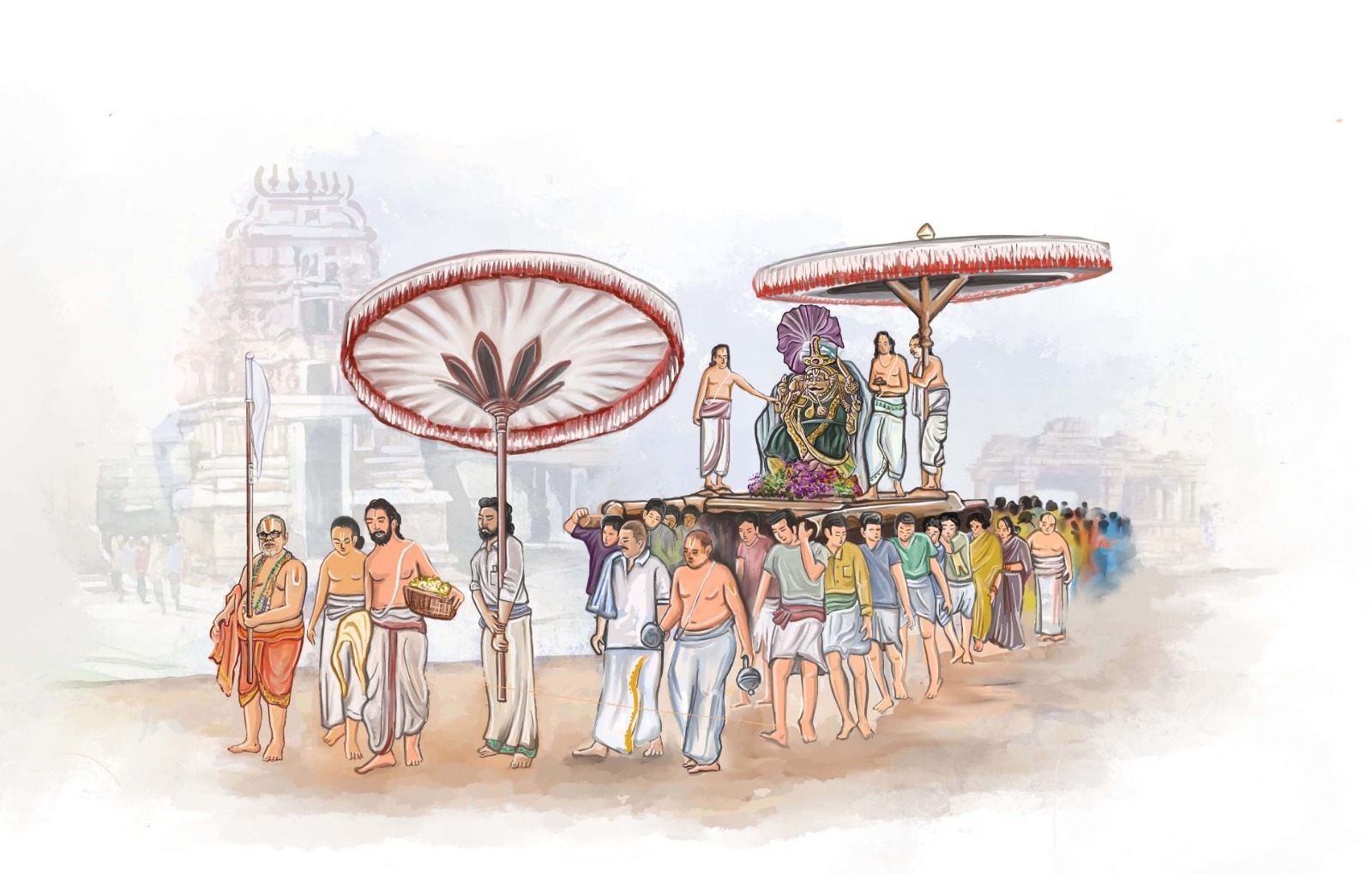
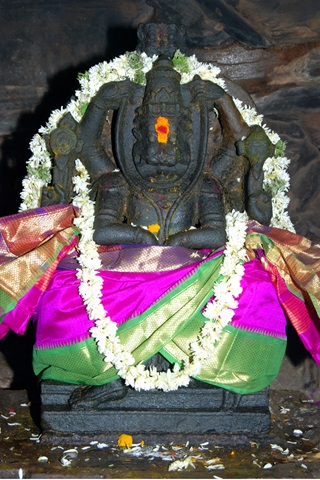
Located on Garudadri hill, this is where Lord Narasimha manifested from a pillar and slayed Hiranyakashipu. The aura here is considered the most fierce and powerful.
EXPLORE SHRINE ▸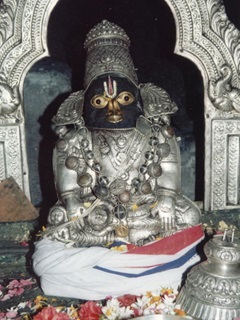
The main cave temple of Upper Ahobilam, radiating the supreme power and peace of the self-manifested Lord. This is the starting point for most pilgrims.
EXPLORE SHRINE ▸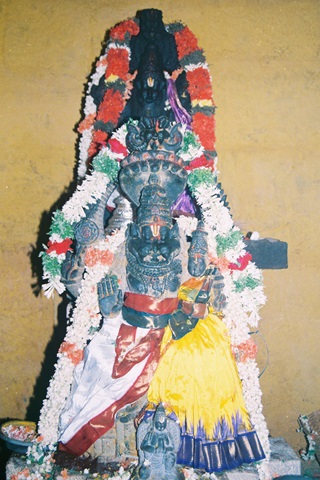
A highly graceful and peaceful form of the Lord alongside Goddess Mahalakshmi on Vedadri hill, signifying divine love and compassion.
EXPLORE SHRINE ▸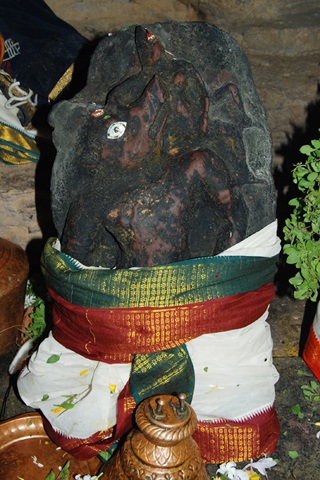
The Lord here has the face of a Boar (Varaha), worshipped specifically to remove severe planetary obstacles like Rahu-Ketu doshas.
EXPLORE SHRINE ▸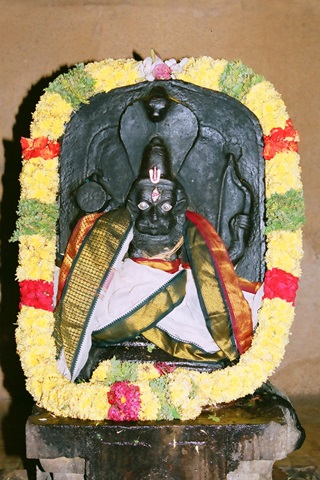
Named after the Karanja tree where Lord Hanuman worshipped Him; uniquely, the deity here features a third eye and holds a bow.
EXPLORE SHRINE ▸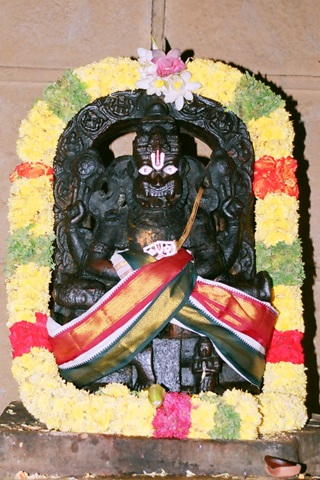
Named after Sage Parasurama (Bhargava) who performed intense penance here to cleanse himself of the sins of war.
EXPLORE SHRINE ▸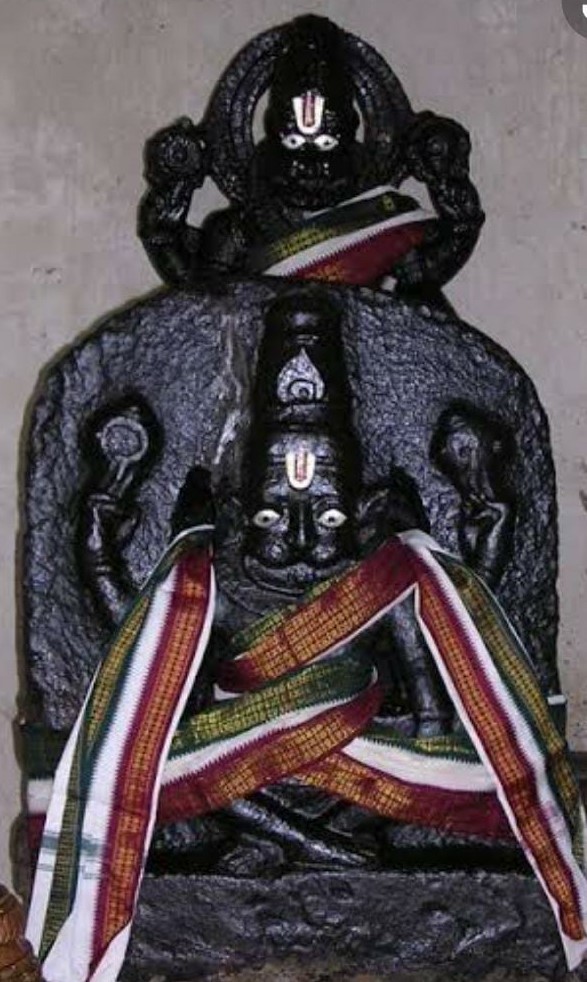
The tranquil spot where the Lord assumed a yogic posture to teach Yoga and Rajaneethi (political ethics) to His young devotee, Prahlada.
EXPLORE SHRINE ▸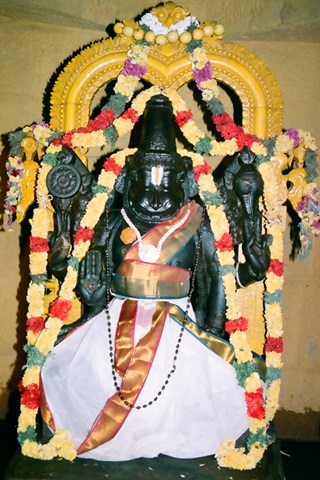
Located under a massive Peepal tree, the Lord here is smiling and is known for His love of music, especially from the Gandharvas.
EXPLORE SHRINE ▸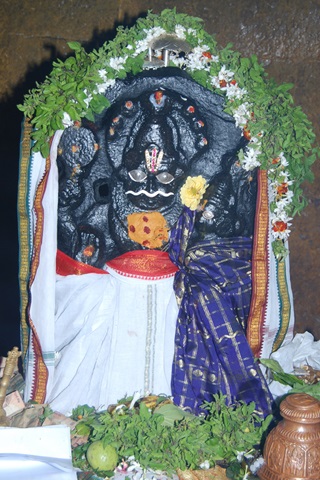
Located deep within the forest on the banks of River Pavana, this shrine is deeply revered by the local Chenchu tribal community.
EXPLORE SHRINE ▸The best time to visit Ahobilam is from August to February when the weather is pleasant. The forest is lush green after the rains, making the trek enjoyable.
Jwala and Pavana shrines require trekking. Wear comfortable walking shoes. Carrying a bamboo stick (available locally) is recommended for support on steep paths.
Traditional wear is preferred. For men: Dhoti/Kurta or Shirt-Pants. For women: Saree or Chudidhar. Avoid shorts and sleeveless clothes as it is a sacred Kshetram.
6:00 AM – 1:00 PM
3:00 PM – 8:00 PM
7:00 AM – 1:00 PM
2:00 PM – 7:00 PM